
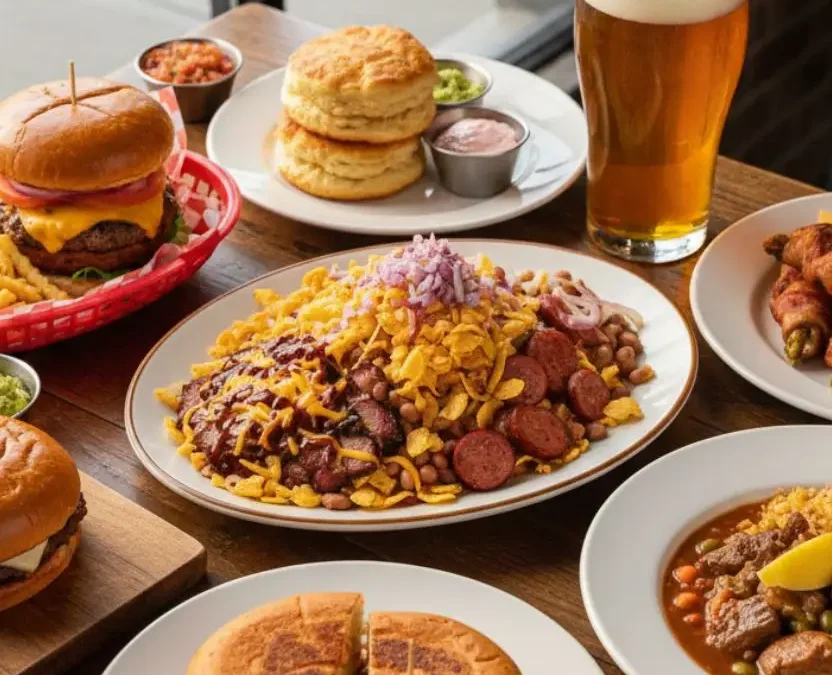
You’ll find Waco’s food scene full of bold, comforting flavors that tell the story of the city. I’ll show you the dishes locals point to again and again—BBQ brisket, the famous Gut Pak, biscuits and gravy, Dr Pepper floats, and more—and explain what makes each one a true Waco signature. If you want to taste what Waco is known for, start with the Gut Pak at Vitek’s, a smoky-brisket-and-Fritos bowl, and pair it with a spot-on barbecue brisket and a Dr Pepper float to get the full local experience.
I’ll also explain why these dishes matter to the community, where to find the best versions, and how to eat them like someone who knows the town. Expect tips that help you skip long lines, choose the right sides, and turn a few meals into a memorable Waco food crawl.
Why These Are the True Signature Dishes in Waco Texas
I picked dishes that reflect Waco’s ingredients, memories, and daily rhythms: locally raised beef and pecans, long-running family recipes, Baylor student tastes, and the city’s barbecue techniques. Each dish ties to specific people, places, and foodways that make Waco distinct.
What Locals and Longtime Restaurants Consider “Signature”
Locals point to dishes they grew up eating and restaurants that have served them for decades. Examples include Magnolia Table’s biscuit preparations, Cafe Homestead’s farm-to-table breakfasts, One Thirty Five Prime’s dry-aged steaks, and longstanding Mexican and BBQ plates from neighborhood staples. I listened to residents and checked which items draw repeat customers or lines on weekends.
Restaurants reinforce those choices by highlighting provenance on menus: locally milled flour, Homestead-grown produce, or beef from nearby ranchers. That transparency builds trust and explains why a dish becomes “signature” — it’s tied to local supply chains, chef stories, and consistent execution over years.
How Waco’s History, Baylor Culture, and BBQ Scene Shape These Dishes
Waco’s agricultural past supplies pecans, corn, and beef that show up across menus. I see that influence in pecan pies, cornbreads, and steaks promoted by steakhouses and farm-to-table cafés. Baylor University brings a steady stream of younger diners, driving demand for approachable comfort foods — sandwiches, tacos, and loaded tater-tots — that appear on many campus-area menus.
The BBQ tradition here favors simple smoking techniques and locally sourced brisket and ribs. Pitmasters in Waco lean on regional woods and low-and-slow timing, which creates the texture and smoke profile locals expect. Together, farmland, student culture, and pitmaster methods produce dishes you encounter again and again across the city.
Why These Foods Can’t Be Recreated Outside Waco
Recreating Waco dishes elsewhere misses three concrete elements: local ingredients, supplier relationships, and community context. Local beef and pecans have specific flavors from Central Texas soil and feed; chefs here adjust recipes around those tastes. Longstanding supplier relationships mean restaurants get consistent cuts and seasonal produce that aren’t available to a distant kitchen.
Equally important is technique passed down in Waco kitchens and smokehouses. A pitmaster’s timing, a baker’s starter, or a baker’s biscuit method reflects hands-on knowledge learned on-site. Finally, the social context — Baylor game-day habits, family recipes shared at church suppers, and weekend tourist traffic — shapes portion sizes, spice levels, and presentation in ways that don’t translate simply by copying a recipe.
Signature Dishes in Waco Texas You Shouldn’t Leave Without Trying
I tasted a lot in Waco and focused on dishes that reveal the city’s culinary character: hearty comfort, Texan barbecue roots, immigrant influences, and a growing farm-to-table scene. Each pick below highlights where to go, what to expect on the plate, and why locals point you there.
The Gut Pak – Vitek’s BBQ
I call the Gut Pak Waco’s most legendary plate. It layers chopped brisket, sausage, and beans over fries and tops everything with shredded cheese and hot sauce. The texture contrast—crispy fries under moist barbecue—and the salty, smoky profile make it easy to love.
Order at Vitek’s counter and expect a casual, crowded room. The portion fills most appetites, so bring cash and share if you want sides. It’s a must-try for first-timers who want a quintessential Waco bite.
The Lip Locker & Oriental Fries – Kitok
Kitok’s Lip Locker burger balances spicy, sweet, and savory with a Korean-American twist I rarely find elsewhere. The patty often comes glazed, paired with pickled veggies and a boldly flavored sauce that nets bright, umami-rich bites.
Their Oriental Fries add sesame, scallion, and a tangy mayo-based drizzle that complements the burger. I recommend ordering both to experience Kitok’s fusion approach and to taste why locals keep returning.
The Big O & Crazy Wings – George’s Restaurant
George’s serves the Big O burger and Crazy Wings as a Baylor-era rite of passage. The Big O arrives stacked and saucy, designed to be messy and satisfying after a game. The Crazy Wings bring a vinegary heat and a crisp finish that pairs well with cold beer.
I find George’s atmosphere part of the appeal: college posters, loud crowds, and quick service. These items feel tied to Waco’s sports culture and local nostalgia.
Jo’s Biscuits & Strawberry Butter – Magnolia Table
Jo’s biscuits are pillowy, flaky, and richly buttery—perfect with Magnolia’s house-made strawberry butter. The butter blends bright strawberry flavor with a silky sweetness that elevates the biscuit without overwhelming it.
I usually get a biscuit with a side of fresh fruit and coffee for a photographed, classic Waco breakfast moment. Expect steady lines; the dish rewards the wait with true breakfast comfort.
The Schmaltz Sandwich – Schmaltz’s Sandwich Shop
The Schmaltz Sandwich layers slow-roasted meats, tangy slaw, and house pickles on sturdy bread. The sandwich leans on savory richness cut by acid and crunch, which keeps each bite lively.
I suggest pairing it with a cold soda and eating it hot. Many visitors discover Schmaltz’s too late, so make this a planned stop rather than an afterthought.
Chicken Gyro & Feta Fries – Alpha Omega Grill
Alpha Omega’s chicken gyro feels authentically Mediterranean: well-spiced chicken, tzatziki, chopped tomato, and warm pita. The meat has char and seasoning that hold up against the cool yogurt sauce.
Their feta fries toss crispy potatoes with crumbled feta and herbs for a salty, creamy counterpoint. I like ordering both to mix textures and flavors representative of Waco’s diverse downtown dining.
Czech Schnitzel – Pivovar
Pivovar’s Czech schnitzel honors Central Texas’s Czech heritage with a thin, crispy breading and tender pork inside. They usually serve it alongside potato dumplings or simple sides that let the schnitzel shine.
I appreciate the restrained seasoning and focus on technique; it’s not flashy but it speaks to regionally rooted comfort food. The dish connects Waco to its immigrant culinary history.
Whizzbang Burger – Captain Billy Whizzbang’s
The Whizzbang burger keeps a decades-long fan base for a reason: a well-charred patty, melty cheese, and a toasted bun stacked precisely. The house “Whizzbanged” fries that often accompany it come loaded and seasoned to complement the burger’s straightforward flavor.
I find the burger hits the classic American formula with consistency—good beef, balanced toppings, and a satisfying fry. Locals recommend it for an authentic Waco burger experience.
Fresh Oyster Platter – Opal’s Oysters
Opal’s focuses on fresh, chilled oysters and small seafood plates that feel more coastal than central Texas. A Fresh Oyster Platter highlights briny, clean oysters with simple accompaniments like lemon and mignonette.
I order a variety to sample different flavor profiles and pair them with a light white wine. The dish represents Waco’s evolving scene—bringing coastal techniques and fresh seafood inland.
Sourdough Focaccia – Red Herring
Red Herring’s sourdough focaccia showcases a chewy crumb, a tangy starter flavor, and an herb-flecked crust. Bakers press dimples into the dough, top with olive oil and sea salt, and bake until golden.
I take it with house-made spreads or as a side to seasonal salads and sandwiches. The focaccia signals Waco’s move toward artisanal baking and elevated casual fare.
Personal Recommendation Gut Pak at Vitek’s BBQ
I tried the Gut Pak at Vitek’s on my last trip to Waco and it stuck with me. The pile of brisket, smoked sausage, beans, and Fritos delivers big, straightforward flavors without pretense.
What I like most is the contrast of textures: crunchy Fritos under tender chopped brisket and soft beans. A drizzle of BBQ sauce and a few pickles or jalapeños tie the ingredients together in a way that feels both casual and deliberate.
If you want specifics, I order the half Gut Pak when I’m sharing or the full if I’m seriously hungry. I appreciate that it’s built to be eaten with a fork (or hands, if you prefer) and is perfect for a picnic or a game-day feast.
Quick tips from my visits:
- Bring napkins; it’s deliciously messy.
- Try the white bread on the side for a classic Texas pairing.
- Go earlier in the day if you want the best chance of avoiding a long line.
I recommend pairing the Gut Pak with a cold drink and a relaxed schedule. Vitek’s serves a slice of Waco culture — approachable, hearty, and meant to be enjoyed with friends.
How to Experience Waco’s Signature Food Scene Like a Local
I focus on timing, route planning, and avoiding common slip-ups so you can taste Waco’s best without wasting time. Follow the simple timing tips, a one-day or weekend crawl, and the pitfalls I’ve learned from eating around town.
Best Times to Visit to Avoid Lines and Sell-Outs
Aim for late weekday mornings or mid-afternoons when popular spots slow down. I go to Magnolia Table or Cafe Homestead right at opening to beat the breakfast rush; that often means no line and fresher bread or biscuits.
For lunch, I target 2:00–3:30 p.m. Restaurants that sell out—especially bakeries and breakfast-focused cafes—often release fresh batches early, so arriving shortly after opening increases your chances. Dinner at steakhouses or trendier spots like Milo is easier on weeknights; Saturday nights usually fill fast.
Use restaurant apps or call ahead for wait times and same-day reservations. I check menus online before leaving so I don’t delay the table and can order items that tend to sell out first.
One-Day and Weekend Food Crawl Ideas
One-day crawl (central Waco): Start at Magnolia Table for biscuits, walk to the Silos area for coffee and pastries, grab a late-lunch sandwich at Schmaltz’s, and finish with tacos or margaritas at Ninfa’s. I keep walking distance under 1.5 miles and book an early dinner reservation for 6:00 p.m.
Weekend crawl (24–36 hours): Day 1 — breakfast at Cafe Homestead, mid-day at Harvest on 25th, evening steak at One Thirty Five Prime. Day 2 — brunch at Milo, afternoon dessert at a local ice cream or bakery, and end with casual Tex–Mex for an authentic finish. I schedule a 20–40 minute break between stops to avoid feeling rushed.
Pack light: a reusable water bottle and hand sanitizer. I map stops in advance and stagger heavier meals with lighter bites to sample more without overeating.
Mistakes First-Time Visitors Make When Eating in Waco
Rushing to the most famous spot without checking peak times leads to long waits. I’ve seen visitors stand in line for two hours at popular restaurants instead of shifting to nearby gems that offer similar quality with far less wait.
Assuming everything is in one district. Waco’s standout places spread across town. I recommend planning transit between neighborhoods—ride-share, a short drive, or a bike—so you don’t lose time.
Skipping reservations or failing to call ahead for weekend or holiday dining causes disappointment. I always reserve for dinner or call to check for sell-outs, especially at bakeries and farm-to-table spots that close when items run out.
Final Thoughts — Why These Signature Dishes Define Waco
I found that Waco’s signature dishes reflect more than flavors; they reveal the city’s history and community. Each plate ties local ingredients, immigrant influences, and Texas barbecue traditions into something distinctly Waco.
I notice how barbecue’s smoke and slow-cook methods connect families and celebrations. At the same time, farm-to-table spots and markets showcase local growers and seasonal pride.
I love how comfort food sits alongside inventive bites from food trucks and wine bars. That diversity keeps the food scene approachable for visitors and valuable to residents.
What stands out most to me is authenticity. Whether it’s biscuits at a bustling café or brisket from a well-loved pit, these dishes carry stories—of chefs, farmers, and longtime patrons.
A few quick takeaways:
- Local ingredients anchor many dishes.
- Tradition meets innovation in menus across town.
- Community spaces—from distilleries to diners—amplify food culture.
I come away wanting to taste more and to recommend specific stops to friends. Waco’s signature dishes invite repeat visits, conversation, and the simple joy of sharing a meal.